About
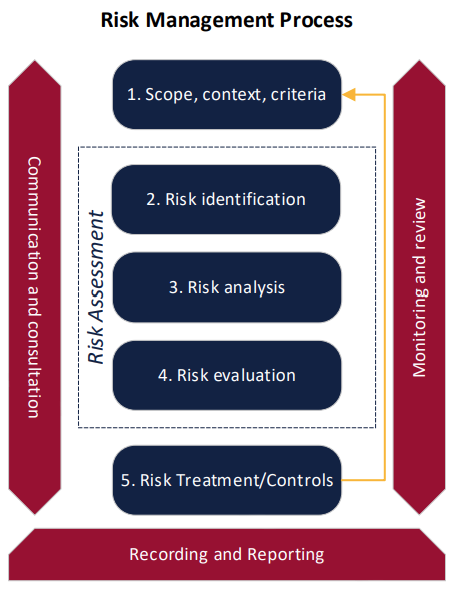
Enterprise Risk Management (ERM) is an integrated approach to managing all risks facing an organization to enhance its ability to achieve objectives. ERM unifies risk management strategies across an organization, covering all types of risks—financial, operational, strategic, etc. This holistic method not only aims to mitigate risks but also to identify opportunities, thereby increasing organizational resilience and value. ERM involves continuous risk assessment, aligning risk strategies with organizational goals, improving response strategies, and fostering a risk-aware culture to support strategic decision-making and long-term stakeholder value.
The purpose of the ERM Program at UNCG is to provide a comprehensive structure to proactively manage risks and opportunities that university leadership collectively agrees are the most important to achieving the institution’s strategic objectives.
The Chancellor has officially adopted the Enterprise Risk Management (ERM) framework for our institution. This strategic adoption signifies our commitment to integrating comprehensive risk management across all facets of our operations to enhance decision-making and improve organizational resilience. The ERM framework will guide us in identifying, assessing, and managing risks systematically, ensuring that our institution is well-equipped to achieve its objectives and navigate uncertainties effectively.